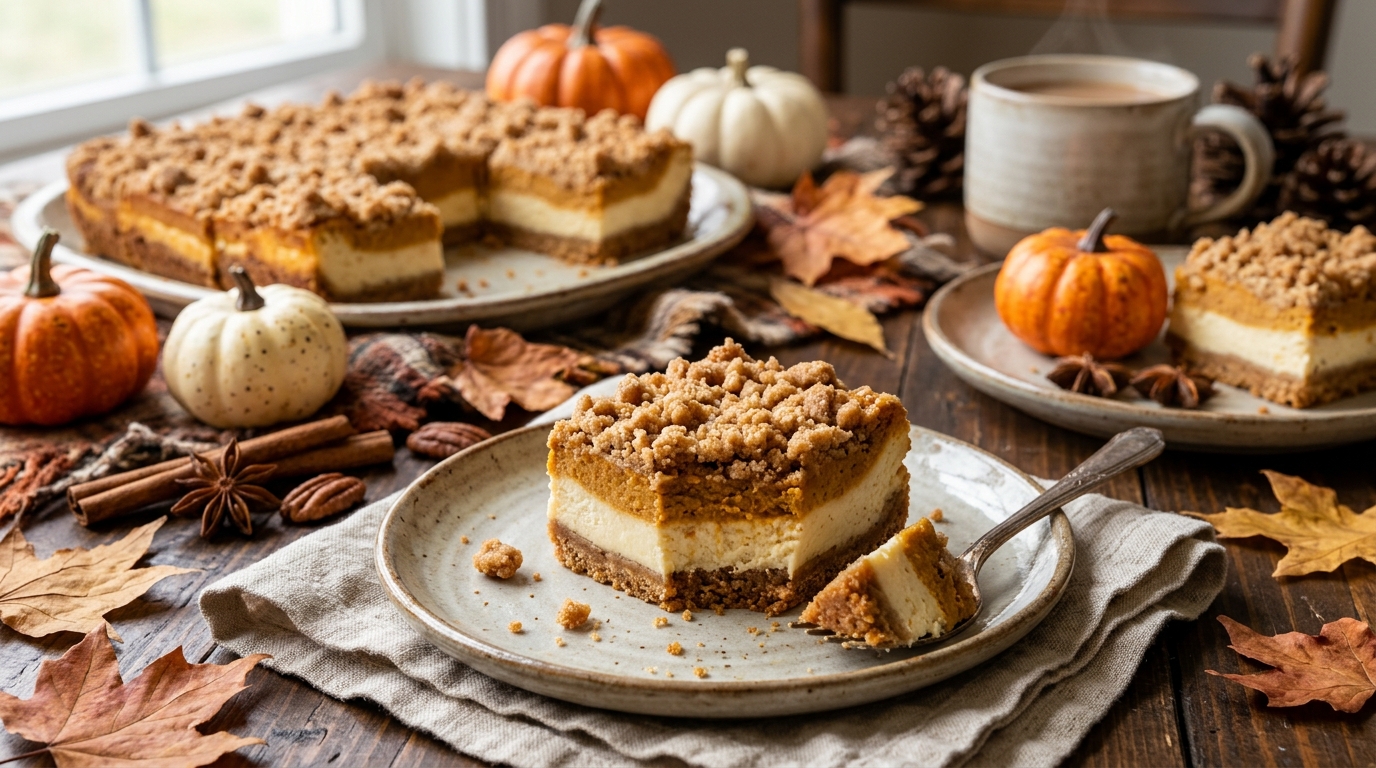
For a weekend baking project that feels comforting but not ordinary, try Pumpkin Cheesecake Crumb Bars with Spiced Cinnamon Crust. Creamy pumpkin cheesecake sits between spiced shortbread and crisp crumbs for a bar that feels like a small autumn dessert. The method below explains what each component is doing, from mixing the batter to waiting for those first neat slices.
Before you start, read through the measurements and allow enough time for cooling. Beat softened cream cheese until smooth before blending with pumpkin, then bake until the center has only a gentle wobble. This is especially useful when working with pumpkin-forward flavors, since the appearance of a bake changes as steam escapes. The finished result should be tender rather than damp, and any crumb topping should hold together when touched lightly.
The small details behind a better bake
Creamy pumpkin cheesecake sits between spiced shortbread and crisp crumbs for a bar that feels like a small autumn dessert. This combination relies on contrast: a tender center against a textured surface, sweetness against a sharper or toastier note, and small pockets of concentrated flavor rather than a uniformly sweet mouthful. That contrast is why it is worth weighing the flour and not rushing the last stage of mixing.
Pumpkin is water-rich but also contains natural fiber, which binds some of that moisture. Use plain canned purée rather than sweetened pie filling. If the purée seems exceptionally loose, a short rest on paper towels can prevent a wet streak just under the crumb layer. For this particular recipe, the signature additions are ¾ cup pumpkin purée; 6 ounces cream cheese; 1 teaspoon cinnamon. Measure them before the flour becomes wet; having everything ready makes it much easier to stop mixing at the right point.
For Pumpkin Cheesecake Crumb, the oven and pan setup deserves attention. Brown sugar adds moisture and a deeper, molasses-like sweetness to the crumb or swirl, while granulated sugar supports a lighter cake structure. Flour is doing two jobs here: it gives the base enough strength to slice, and it creates little crisp edges where the topping meets the oven heat.
Before you turn on the mixer
For Pumpkin Cheesecake Crumb, the oven and pan setup deserves attention. Room-temperature eggs mix evenly into softened butter, while melted butter should cool before it meets the eggs. If butter is too hot, it can make the batter greasy instead of smooth. Yogurt or sour cream should be stirred first if liquid has collected on top.
The batter for Pumpkin Cheesecake Crumb benefits from careful handling. Spoon it loosely into a dry measuring cup and level it, or use the gram weights in the ingredient list. Extra flour makes a cake feel heavy and a crumble feel dusty. Leavening should be measured with a level spoon; too much baking powder can cause an early rise followed by a collapse.
Beat softened cream cheese until smooth before blending with pumpkin, then bake until the center has only a gentle wobble. This step may sound minor, but it has a direct effect on the finished slice. Coarse pieces, thin ribbons and pockets of fruit heat at different rates; arranging them deliberately avoids a wet center surrounded by dry edges.
Ingredients for 16 small bars
The quantities below are a practical home-kitchen starting point. Match the visual doneness cues in the method to your own oven and pan.
Crust and crumble
- 2 cups (250 g) all-purpose flour
- ¾ cup (170 g) unsalted butter, cold and cubed
- ½ cup (100 g) packed brown sugar
- ¼ cup (50 g) granulated sugar
- ½ teaspoon fine salt
- ½ teaspoon vanilla extract
Fruit or filling binder
- 1 tablespoon lemon juice (for fruit-based bars)
- 1 tablespoon cornstarch (for juicy fresh fruit), adjusted to taste
Signature flavors
- ¾ cup pumpkin purée
- 6 ounces cream cheese
- 1 teaspoon cinnamon
- 1 large egg and ⅓ cup granulated sugar for the pumpkin-cheesecake filling
- ½ teaspoon vanilla for the filling
Set up a calm baking session
For Pumpkin Cheesecake Crumb, the oven and pan setup deserves attention. Oven temperatures can drift, so a basic oven thermometer is useful if your cakes frequently bake too fast or stay pale. Lining the pan also helps protect tender baked edges when lifting them out.
Gather bowls for dry ingredients, wet ingredients and any crumb topping. Prepare the ¾ cup pumpkin purée; 6 ounces cream cheese; 1 teaspoon cinnamon before the batter is finished. The benefit of this simple setup is that you will not accidentally keep stirring while waiting for a topping, which can make the finished texture tight.
Bake it, one stage at a time
Prepare the pan carefully
For Pumpkin Cheesecake Crumb, the oven and pan setup deserves attention. Line the 8-inch (20-cm) square metal pan with a long parchment sling and grease the exposed edges. Bars are much easier to cut when they can be lifted out in one slab after cooling.
Build the shortbread dough
The batter for Pumpkin Cheesecake Crumb benefits from careful handling. Rub in cold cubed butter with your fingertips or a pastry cutter until the mixture contains both sandy particles and pea-sized pieces. Add vanilla at the end.
Reserve the crumb topping
For Pumpkin Cheesecake Crumb, the oven and pan setup deserves attention. Press the rest firmly into the lined pan using the bottom of a flat measuring cup. Even thickness helps all the edges bake at the same rate.
Start a crisp bottom
The main filling in Pumpkin Cheesecake Crumb needs a little care. Let it cool a few minutes before spreading the filling.
Prepare a stable filling
Measure ¾ cup pumpkin purée; 6 ounces cream cheese; 1 teaspoon cinnamon. Beat softened cream cheese until smooth before blending with pumpkin, then bake until the center has only a gentle wobble. Toss fresh fruit with lemon and cornstarch where appropriate; thick jam, chocolate spread or cheesecake filling needs its own thickness instead of additional starch.
Layer without disturbing the crust
For Pumpkin Cheesecake Crumb, the oven and pan setup deserves attention. Scatter the reserved crumbs over the surface, allowing some of the colorful center to remain visible.
Bake to color and texture
The crumb texture in Pumpkin Cheesecake Crumb depends on ingredient balance. Cream cheese versions should have a lightly set, gently moving center.
Wait before cutting
For Pumpkin Cheesecake Crumb, the oven and pan setup deserves attention. Chill for an hour if the filling is creamy, sticky, or particularly juicy. Lift with parchment and slice with a sharp knife, wiping the blade between cuts for clean layers.
Little finishing choices
Serve chilled for the cleanest slices and best creamy texture. For a less-sweet finish, leave off extra icing and let the crumb topping do the work. For a sweeter dessert, use a very thin glaze after cooling rather than adding extra sugar to the batter, where it can affect structure.
Allow Pumpkin Cheesecake Crumb time to settle before serving. Avoid swapping several ingredients at once; if a bake changes too much, it becomes difficult to understand what caused the different texture.
The crumb texture in Pumpkin Cheesecake Crumb depends on ingredient balance. If you need a nut-free result, omit them and use an equal volume of extra streusel instead; always check chocolate and other packaged ingredients for relevant allergen labeling.
Explore another texture
For a different take on dessert bars, try Strawberry Rhubarb Crumble Bars with Buttery Oat Streusel. Its ingredients shift the flavor in another direction while keeping the familiar comfort of a home-baked crumb. Comparing two recipes in the same family is also a useful way to learn which toppings and textures you enjoy most.
A practical make-ahead plan
For Pumpkin Cheesecake Crumb, protect the texture before putting portions away. Steam trapped in a closed container collects on the top and softens streusel. For the first day, a loose cover at cool room temperature generally preserves the crispest texture. Keep dairy-filled versions refrigerated promptly, and refrigerate any bake that contains a cream cheese layer.
For Pumpkin Cheesecake Crumb, protect the texture before putting portions away. Most plain cakes, muffins and bars can also be frozen individually for around two months with tight wrapping. Freeze only once they are completely cool to limit ice crystals.
For Pumpkin Cheesecake Crumb, protect the texture before putting portions away. A brief warm-up in a moderate oven helps restore a little crunch to breads and cakes; avoid aggressively reheating cream cheese fillings. Glaze may become less defined after freezing.
Practical notes for next time
Can I make the topping ahead?
Yes. Mix the crumb ingredients and refrigerate them covered until ready to bake, preferably within a day. Break apart any hard chunks gently before using. Beat softened cream cheese until smooth before blending with pumpkin, then bake until the center has only a gentle wobble. Keep batter-making close to baking time so chemical leavening does not sit in a wet bowl for hours.
Can I use frozen fruit or a different pan?
Frozen fruit often works best added without thawing, though bake time may increase. For Pumpkin Cheesecake Crumb Bars with Spiced Cinnamon Crust, a larger pan makes a thinner bake and a smaller pan makes a thicker one, so follow doneness signs rather than the clock alone. Metal pans are more predictable than thick glass.
How do I avoid a dry result?
The batter for Pumpkin Cheesecake Crumb benefits from careful handling. Remember that the toothpick may touch pumpkin pieces and show moisture even after the surrounding crumb is done. Check in two positions rather than repeatedly baking past the point of tenderness.
Should I glaze while it is warm?
For Pumpkin Cheesecake Crumb, a little finishing glaze can change the balance. A warm surface melts powdered-sugar glaze and sends it into the crumbs, which makes the top sticky. If you prefer a thin absorbed glaze, apply it when barely warm, not straight from the oven.
Avoiding the common texture traps
The finished bake should smell fragrant and toasty, with a settled center and edges that no longer look wet. Overbaked cheesecake filling can crack or turn grainy; pull it while the center still moves slightly. A skewer is useful, but check in a section without a large fruit piece, melted chocolate, or a thick swirl of sugar; any of those can make the skewer look damp even when the crumb is baked.
For Pumpkin Cheesecake Crumb, the oven and pan setup deserves attention. If the outer edges are unusually dark, consider whether your pan is very dark or the oven rack is too low. Those details can matter more than adding extra flour next time.
Allow Pumpkin Cheesecake Crumb time to settle before serving. A warm cake continues to release steam, while jammy or creamy layers need time to set. Cutting too early can make a properly baked center look gummy and tear the topping. For cleaner slices, use a sharp knife and wipe the blade as needed.
Pumpkin Cheesecake Crumb Bars with Spiced Cinnamon Crust does not ask for elaborate decoration. Serve chilled for the cleanest slices and best creamy texture. Pay attention to the texture of the batter, the feel of the finished center, and the cooling time; those observations are more valuable than chasing a perfect-looking photo.