Apple spice bread succeeds when slices reveal soft apple pieces instead of a wet streak. Cinnamon oat crumbs bring the contrast, provided the topping has enough cohesion to stay put.
In this baking guide, the focus is on the decisions that make apple spice bread distinct: ingredient preparation, how the layers meet, what doneness actually looks like, and how to preserve the texture after cooling. These are practical development notes based on the topic outline, not a claim that a finished formula has been kitchen-tested.
Ingredients that shape apple spice bread
The cinnamon is clearest when it is dispersed through the flour-and-sugar crumb rather than left in small concentrated piles. Darker brown sugar increases the molasses impression, which may or may not be desirable beside a delicate vanilla base. The decision matters when planning apple spice bread.
A loaf pan holds a relatively deep column of batter. Recipe decisions must consider the browned exterior as well as the center that sets later. In this version of apple spice bread, consider the relationship to the chosen topping and filling.
A firm apple that holds its edges after heating is usually more helpful here than a very soft eating apple. Dicing consistently matters: pieces of noticeably different sizes cook at different rates, so some stay hard while others collapse. These details shape apple spice bread rather than a generic cake.
Select apple pieces that soften inside loaf slices
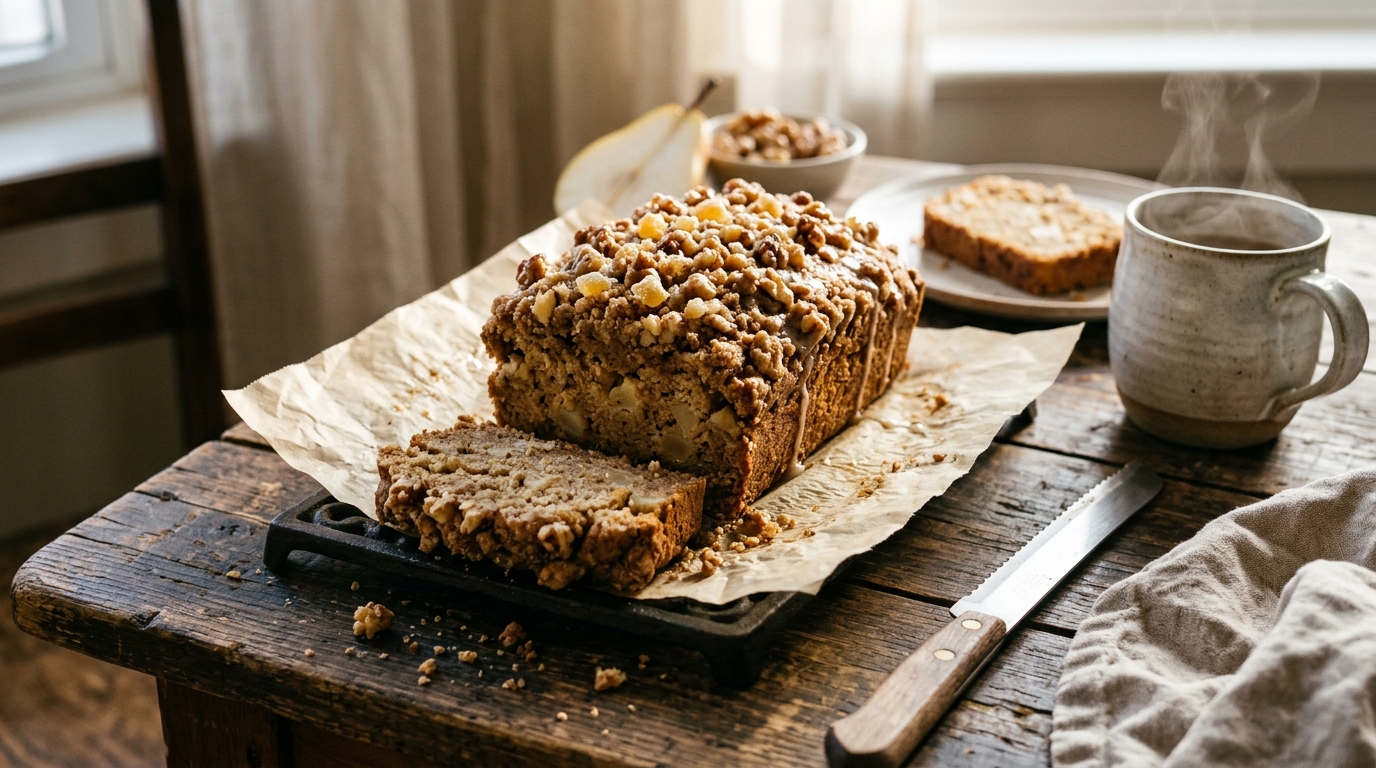
Firm, flavorful apples make it easier to show small pieces in a finished loaf. Peel if the skin is tough, then dice consistently rather than leaving large wedges in a narrow slice. Place the pan on a stable rack and allow steam to escape before tightly wrapping. A still-warm cake sealed under plastic traps condensation, which softens any crisp topping.
The apple layer should taste of fruit rather than simply cinnamon-sugar. Seasoning in several components works only when the actual pieces still register. Compare a slice cut after cooling with one cut while still warm; the difference helps reveal which texture belongs to the filling and which comes from trapped steam. For apple spice bread, use this observation when reviewing select apple pieces that soften inside loaf slices.
Development checkpoint for apple spice bread: A useful photograph can capture the defining technique: distribute warm spices without overpowering apples.
Distribute warm spices without overpowering apples
Apple spice should support the fruit, not replace it. Blend cinnamon and any secondary spices evenly through the batter so one bite does not taste markedly stronger than another. Apple pieces soften at different rates based on variety, ripeness and cut size. A consistent dice is more useful than perfection: large hard cubes interrupt the cake, while tiny soft pieces may dissolve into the batter.
Taste and aroma do different jobs. Citrus zest contributes fragrant oils, while juice adds acidity and water; spices give warmth, while extract can sharpen or soften the impression. Each ingredient should have a purpose in the overall balance. Photograph the fruit distribution before baking, then compare the cut side once cool. That check shows whether pieces remained distinct and where liquid collected. For apple spice bread, use this observation when reviewing distribute warm spices without overpowering apples.
Development checkpoint for apple spice bread: A side-by-side comparison could show a cut-side comparison focused on apple dice.
Create oat crumbs that do not slide off the loaf
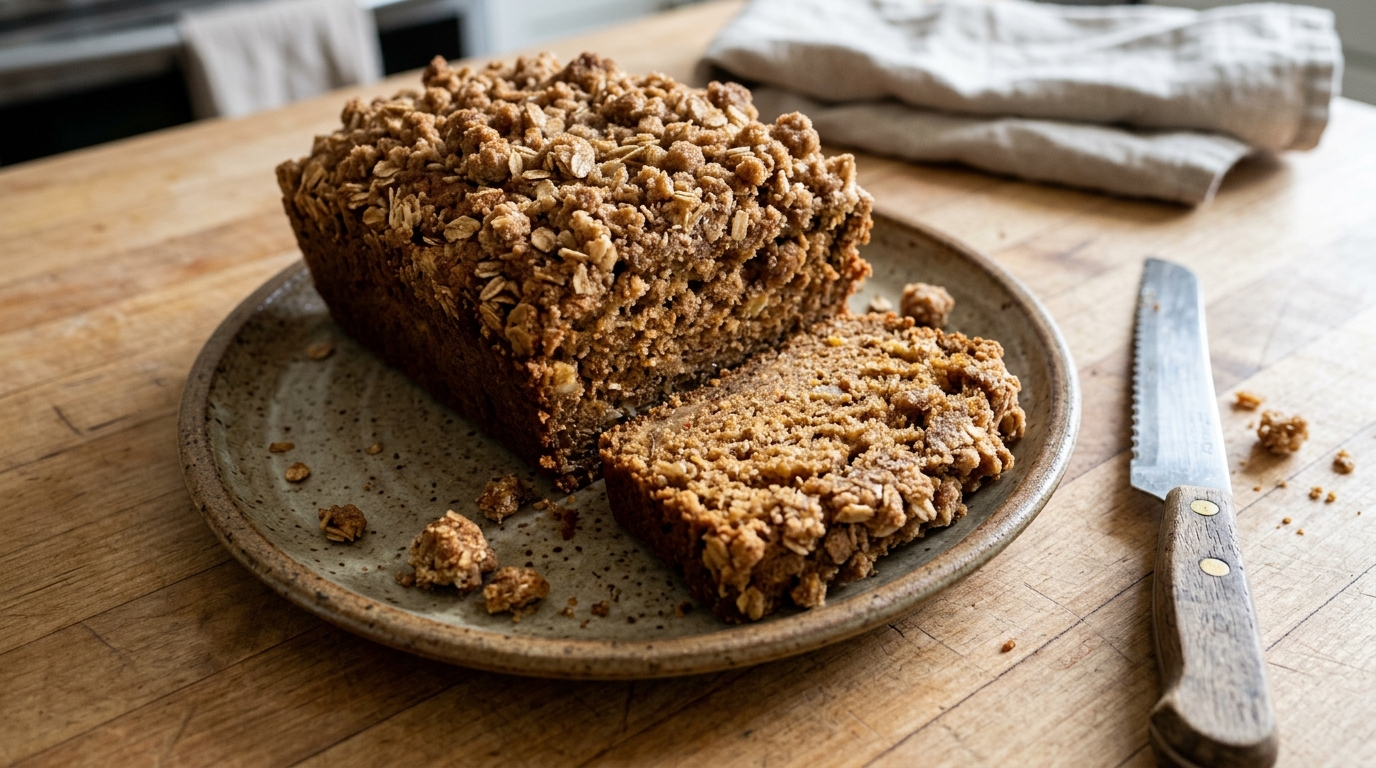
Oat crumbs need enough butter to bind, especially on a loaf that rises into a dome. Loose dry flakes can slide off the sloping surface instead of baking into clusters. Aim for a mixture of small and medium fragments rather than perfectly equal pellets. Tiny particles fill spaces while larger ones make that bakery-style broken surface. Overmixing can turn crumbs into a single greasy mass.
Rest the loaf in its pan only as long as necessary for it to firm enough to move safely, then let it cool on a rack before slicing; trapping steam softens the streusel and crust. A close photograph of the unbaked clusters beside the baked top makes it easier to see whether the crumbs kept their definition or melted together. For apple spice bread, use this observation when reviewing create oat crumbs that do not slide off the loaf.
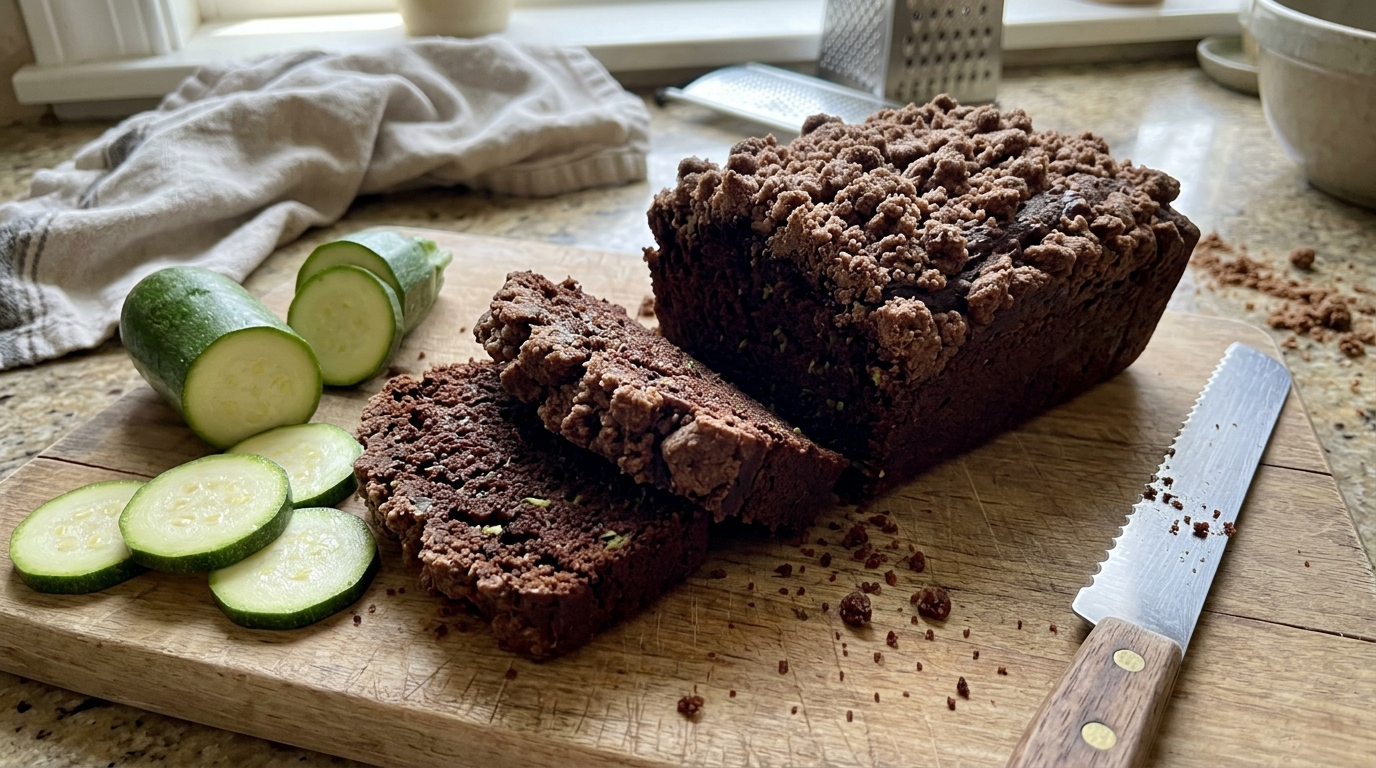
Development checkpoint for apple spice bread: Keep notes on step-specific failure modes for “bake through a moisture-rich apple loaf”. Compare the balance of a moist loaf and its crumb topping with the approach considered in chocolate zucchini bread with buttery cocoa crumbs.
Bake through a moisture-rich apple loaf
The apple pieces hold moisture in the center. A wet stripe beneath the topping may signal that the deepest batter never set, even when the exterior is attractively browned. An oven dial reports a setting, not necessarily the temperature beside the pan. Rack position, pan material, and a crowded oven affect browning. If the top colors before the middle sets, address the heat distribution rather than simply leaving the bake uncovered indefinitely.
Apple pieces soften at different rates based on variety, ripeness and cut size. A consistent dice is more useful than perfection: large hard cubes interrupt the cake, while tiny soft pieces may dissolve into the batter. For the development record, note where the center was tested and how the crumb looked after it had cooled. That is more reliable than a single surface photograph. For apple spice bread, use this observation when reviewing bake through a moisture-rich apple loaf.
Soggy strip beneath topping
Aim for a mixture of small and medium fragments rather than perfectly equal pellets. Tiny particles fill spaces while larger ones make that bakery-style broken surface. Overmixing can turn crumbs into a single greasy mass.
Development checkpoint for apple spice bread: Confirm before publishing ingredient weight, pan size, yield and actual timing only after recipe testing.
Store slices so the oat surface stays pleasant
Protect the oat crust by cooling the loaf before wrapping. An airtight box with trapped warmth may leave the topping noticeably softer the following morning. Place the pan on a stable rack and allow steam to escape before tightly wrapping. A still-warm cake sealed under plastic traps condensation, which softens any crisp topping.
Aim for a mixture of small and medium fragments rather than perfectly equal pellets. Tiny particles fill spaces while larger ones make that bakery-style broken surface. Overmixing can turn crumbs into a single greasy mass. Compare a slice cut after cooling with one cut while still warm; the difference helps reveal which texture belongs to the filling and which comes from trapped steam. For apple spice bread, use this observation when reviewing store slices so the oat surface stays pleasant.
Development checkpoint for apple spice bread: A useful photograph can capture the defining technique: distribute warm spices without overpowering apples.
What can go wrong with apple spice bread?
With apple spice bread, a single visual symptom does not always have a single cause. The quickest way to improve a second batch is to change one variable and record whether the cut-side texture improves.
| What you notice | What to check |
|---|---|
| Loaf is dark outside and raw within | Consider pan color, loaf depth, oven accuracy, and whether excessive moisture was added. |
| Center sinks after removal | Check whether the core had actually set before removing from the oven. |
| Topping slides during slicing | Check crumb cohesion and allow the loaf to cool all the way through. |
| Slices show wet fruit streaks | Measure and distribute the fruit consistently, then test the center away from wet pieces. |
A practical test-bake checklist for apple spice bread
An accurate finished recipe for apple spice bread needs more than a successful-looking photograph. A complete formula should specify weights, pan size, oven setting, method, yield and a reproducible check for doneness. Until those facts have been confirmed, use the following worksheet to separate the most important variables. It is intended for careful recipe development, not as a substitute for the tested ingredient list that should accompany a publishable recipe.
- Start with one controlled ingredient decision. Use apples prepared one consistent way throughout the batch. If comparing fresh with frozen or a different ripeness, document that as its own version. More than one change at once makes it harder to identify which choice mattered.
- Write down the equipment. Note the material and exact dimensions of the deep loaf pan. Record rack position and check whether the oven actually reaches the selected temperature. Those details matter more than a vague instruction to bake until golden.
- Keep the surface intentional. Record the streusel particle size before baking. A photograph of both fine granules and larger clusters will help explain how the finished surface develops. Spread the topping evenly enough that every serving has a fair share, while preserving the uneven shape that makes streusel appealing.
- Check more than one position. Compare a center slice and a slice closer to the end. Watch for glossy uncooked batter or uncontrolled filling, not merely a dark surface. Photograph the cut side once the bake is cool instead of relying only on a toothpick.
- Taste after the texture has settled. Evaluate sweetness, spice and tenderness once the baked item has cooled. Note whether fruit pockets remain distinct, whether the crumbs still snap, and whether the portion is easy to lift or slice.
The next version of apple spice bread should answer one concrete question, such as whether its topping retained crunch or whether the center set around its inclusions. If an adjustment helps one component while harming another, keep that trade-off in the notes. This process builds a defensible method without manufacturing precision.
Serving and storing apple spice bread
How apple spice bread is served is not an afterthought. If you want the topping to keep its bite, let steam escape before covering. If the filling is soft, cut after it has settled; otherwise even a well-baked piece can collapse under the knife. For storage, follow the safety needs of the final ingredients, particularly any cream-cheese filling, rather than assuming that every crumb-topped bake behaves like a plain dry cake.
Measuring flour by weight gives a more repeatable starting point than packing it into a cup. Uneven measurements can make the same method produce noticeably different crumb. A dependable finished recipe still requires repeatable measurements, sensory checkpoints, and at least one complete bake before exact timing or yield can be stated. Until then, the most useful takeaway is the technique: note what each component is meant to do, then evaluate the cooled slice against that intended texture.